Sakufu-ten: When the Master signs the work
1 November 2026 · 3 min read
There is a subtle yet profound nuance in how the bonsai world in Japan recognizes and honors its creators. If you have followed major Japanese exhibitions, the first name that comes to mind is likely Kokufu-ten—widely considered the most prestigious exhibition stage in the world.
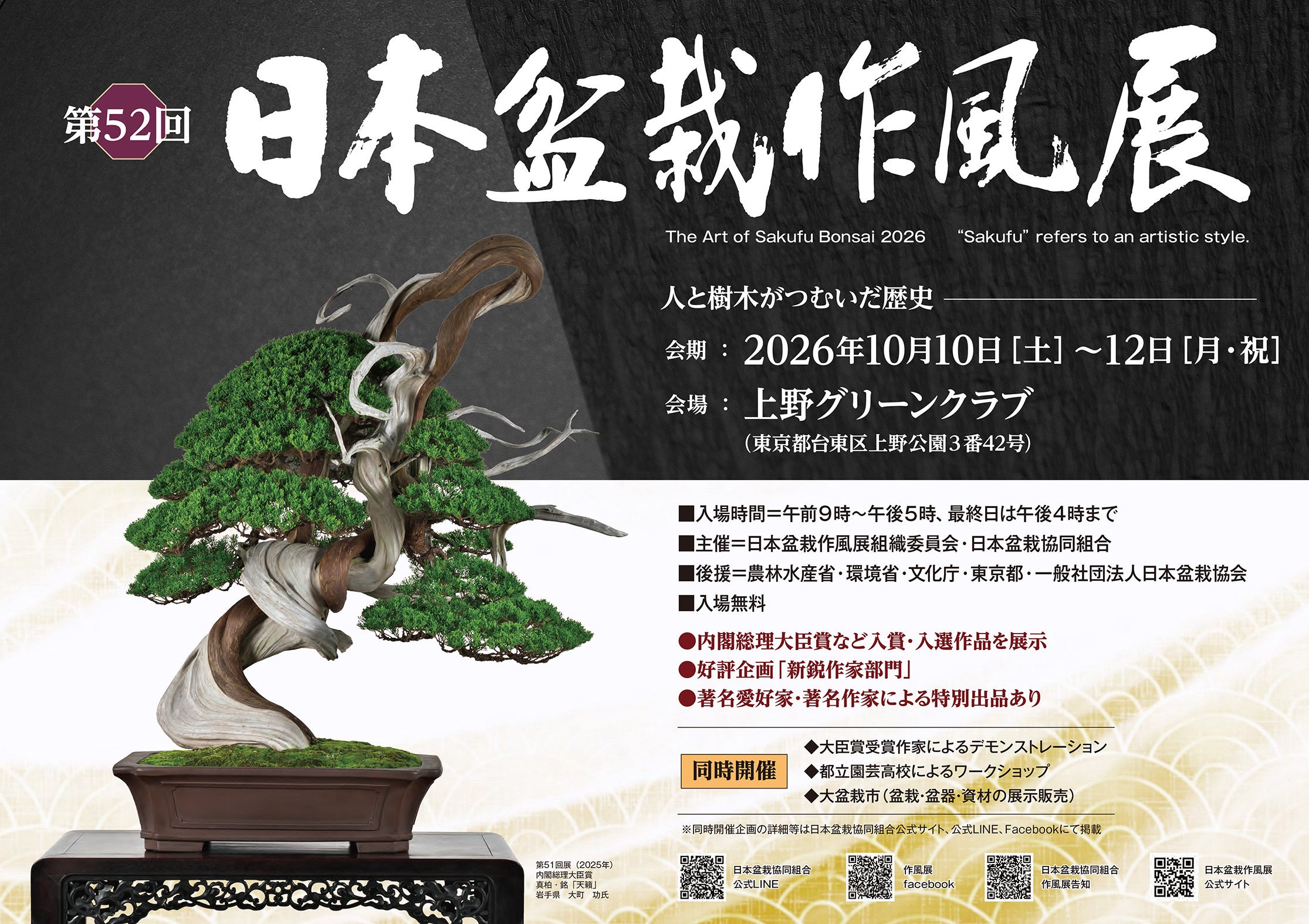
However, in the shadow of autumn, during mid-October, another event takes place with a truly special significance: Sakufu-ten (Japan Bonsai Sakufu Exhibition).
To understand why Sakufu-ten holds such a respected place in the hearts of practitioners, we need to look closer at the label on the display table.
The Difference on the Label: Kokufu-ten vs. Sakufu-ten
At Kokufu-ten, the exhibition belongs to the collectors. On the display plaque next to each tree, the name of the owner is inscribed—the person who cares for, finances, and keeps the work in their private collection. Even though a renowned master may have shaped and refined that tree over decades in their studio, at Kokufu the public credit granted by the organizers belongs to the tree's legal guardian.
At Sakufu-ten, the paradigm shifts completely.
Founded by the professional guild (Nippon Bonsai Sakafukai), Sakufu-ten is the creators' exhibition. It is the only major event where the name of the master (or professional) who designed, structured, and refined the work is printed directly on the label. Here, you are no longer evaluating just the historical or material value of a tree, but the technical vision, artistic signature, and mastery of the hands that worked on it.
How Sakufu-ten Takes Place
The mechanics of the event blend the rigor of a high-level professional competition with accessibility for the general public:
1. Judging Round (Behind Closed Doors):
In the days leading up to the opening, masters from across Japan bring their finest works to the historic Ueno Green Club building in Tokyo. The evaluation committee judges the compositions in detail and awards major honors, including the coveted Prime Minister Award. It is also during this quiet phase that official photographs are taken for the annual exhibition album.
2. Public Exhibition and Autumn Market:
Once judging concludes, the doors of the three-story building in the Ueno area open to visitors. The public can admire the awarded compositions across all floors—from Japanese Black Pines (Kuro-matsu) and dramatic Junipers (Shimpaku), to refined Shohin displays or deciduous species captured in full autumn coloration. In parallel, the outdoor courtyard transforms into a massive market (Grand Market), where nurseries bring pre-bonsai material, collectible pots, and specialized tools.
A Look at the 52nd Edition (October 2026)
The most recent edition—the 52nd in the history of Sakufu-ten—took place from October 10 to 12, 2026, at the Ueno Green Club.
It was a remarkable demonstration of balance between mature deadwood (jin and shari) and the freshness of modern techniques. Unlike the beginning of the year (when Kokufu-ten takes place in February during strict winter dormancy), Sakufu-ten offers the opportunity to observe the silhouettes of deciduous trees in full chromatic transition and conifers impeccably prepared for the cold season.
An Invitation to Reflection
Sakufu-ten reminds us of a simple truth we sometimes forget in the pursuit of quick results: a bonsai is an ongoing dialogue between human intention and the nature of the tree. When you look at a tree at Sakufu-ten, you see more than a finished work - you recognize the years of apprenticeship, daily discipline, and the invisible signature of the person who knew where to prune and where to leave space.
Visual Resources
For a complete look at the atmosphere and displays at the Ueno Green Club, you can watch the video tour of the 52nd edition:
- 🎥 The 52nd Japan Bonsai Sakufu Exhibition (2026) – Complete three-floor tour of the exhibition.